Showing posts with label Racial Dynamics Project. Show all posts
Showing posts with label Racial Dynamics Project. Show all posts
Tuesday, March 8, 2011


Sunday, September 19, 2010
Final Stages of Editing & Amateur Lessons

I met with my advisor-professor, Dr. Durington, so he could watch the rough cut of my Racial Dynamics Project (which needs a new name--an appropriate video title) and great headway was made. Prior to editing I believe the rough cut was around 38 minutes. It is now down to 26 minutes and I still have a day's worth of work before we can evaluate it again. A large cut was made from an entire section I had reserved for opinions on "Affirmative Action." This had gradually stemmed from conversations with my roommate that I felt would be interesting to add in what would become an immense digression from the initial starting point--the context of Allen Zaruba's firing. (Perhaps with the release of the film I will reveal my interview questions so all who are interested will be able to see how this occured.) Dr. D paused the film a few seconds into the affirmative action section and made note of the digression. At this moment I realized that I had a lack of structure and organized methodology surrounding this project that most likely weakened the larger potential and orientation of the film. Luckily I am currently taking a methods class that should better help me organize future films. Although I will never know how much stronger my film could have been if I had more structure, it is in no way problematic, rather more of a learned lesson for an amateur ethnographer.
In this prescreening session we also identified that I could begin to add the glitter and the glam. A voiceover, screenshots from The Towerlight, and music will all be added in the next few weeks. Not much to talk about there until I draft a voiceover, find the right pictures and newspaper clippings, and the right music.
Sunday, August 1, 2010
Editing on Final Cut Pro...nevermind, iMovie...no wait let's do FCP...maybe

I have been editing since the beginning of the summer and I am not yet finished. For the record, it does not and should not take this long to edit 5 hours of raw footage. I've just been taking it in stride, sometimes going 2-3 weeks without looking at the footage, simply because I had other things to do or I just didn't feel like going through all of the interviews. Also, it took longer than expected for me to collaborate with Dr. Durington, a Towson professor and producer of Record Store. We had plans to use the department's iMac to utilize Final Cut Pro (iMovie's big brother) so the production and editing would be, for the lack of a better word, awesome. Basically, there are more options and the quality is better. Once we finally got together we had problems with the computer. To make a long story short I ended up finishing a rough cut on iMovie and we will be collaborating within the next week to close the editing process.
There is still much to discuss about the presentation of the movie (i.e., where it will be held, how should it be advertised, who is my audience, etc.). Ideally, I want it to be huge and I want it to impact a lot of people from different multicultural backgrounds. I decided that while I love academic material I want to go way outside of that box and engage in applied anthropology that has an effect on the lives of not just anthropologists and culture studies scholars, but also the average woman or man.
Saturday, May 22, 2010
Racial Dynamics Project update

- I am currently watching and rewatching footage
- Taking notes on philosophies, perspectives, and experiences of the interviewees (I am not speculating or analyzing statements and ways of thinking yet. I am simply noting their views about racial issues)
- I have yet to take notes on the classroom discussion since I will have to analyze far more than individual perspectives, but also reactions to comments, particular ways of speaking, body language reactions, etc
- Beginning to notice correlations between interviewees and their views
- EVERYTHING they say is important data, even if it is incorrect/invalid or "different"
Thursday, May 20, 2010
Edited film versus raw footage

As I started to review and take notes on the footage I had gathered from interviews and the class discussion on race, I noticed great benefits in raw, unedited film. Since nothing had been changed from the original footage, I could study every aspect of the film in its entirety. Also, because I knew of circumstances that cannot be determined solely from the footage (i.e., in depth personalities, social backgrounds, conversations outside of the frame, and my relationship with certain individuals), I immediately understand more than an audience would. This is not to say that I cannot add a voiceover to explain these aspects. However, without additional features, the film may be misinterpreted by an audience. Even with additional help audiences may still misunderstand the meanings in/intention of my film. So what's the point of showing this to an audience when all the data, in its unaltered form is available?
First off, no one wants to see unedited footage (unless you are conducting scholarly work). This hi-tech generation is very impatient and unsatisfied with long films that fail to entertain or stimulate the brain. As stimulating as topics on race are, my raw footage is probably not as captivating to an audience who knows nothing about me, Towson U, or my interviewees. And it doesn't help to be in the ethnographic/documentary genre since many people associate these films with words like boring and dull (however, creative filmmakers are experimenting to change these views). Nowadays, people expect to be entertained. Raw footage simply does not live up to those standards.
With that said, what type of film is more beneficial in respect to what I am trying to accomplish, edited or unedited? I started this project (after the firing of Allen Zaruba) with a few questions that can best be summarized into the following: Are there racial issues on Towson's campus between white students and black students? This question branched out into topics of racism, discrimination, affirmative action, etc. However, the main reason for conducting the interviews was to understand the extent of racial issues on campus. In this case, it would make more sense that I should use the acquired raw footage to simply analyze and make discoveries. At the same time, creating an edited version that is a detailed summary of all my footage, allows an audience to also understand racial dynamics on campus. Although I really want to create an edited ethnographic film, I will need to evaluate the reasons for doing so. More later...
Thursday, May 6, 2010
Chris Rock & An Indirect Critique on Race & Comedy
(1:37 - 2:46)
I found the Chris Rock clip while reviewing my footage of the classroom discussion and I believe it sums up ideas of jokes about race. This theme is centered around the difference between a white person making fun of a black person versus a black person making fun of a white person. The class seemed to be in agreement on this particular topic.
Friday, April 30, 2010
Camera Upgrade

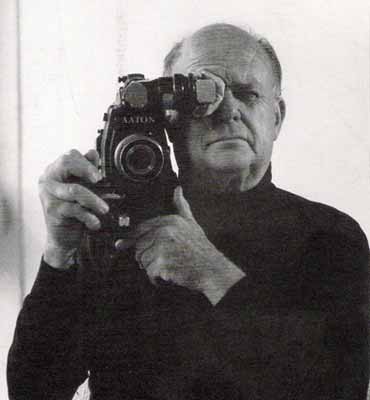
Either May 4th or the 6th I will be filming my culture studies class, "Global Perspectives on Culture". Prof. Baker has focused the course on terrorism, minority identities, ethnocide, and ideocide. Although much of our syllabus is centered around these topics, we talk about everything under the sun. Topics we have discussed: sexual abuse of children by Catholic priests, racial and ethnic stereotypes in popular movies, new Arizona immigration laws, the firing of Allen Zaruba, the concept of abolishing race, Chinese censorship, the earthquake in Haiti, so on and so forth. With this environment, students are open and conscious to a wide array issues on culture, so this is a great place to film a discussion on themes in my film. As of now, I have 1) a 35 mm Panasonic camera on a tripod (pictured below) to capture the classroom from a corner of the room and the 2) Flip Video which I will use for more closer, intimate shots. One might ask, "Why do you need the Panasonic? Why not shoot with the Flip?" and "What's the purpose of filming a classroom discussion?"
The Panasonic:
The Flip is a great camera for filming subjects within a few feet, which is what I have been doing for my interviews. Now, since the parameters are larger in the classroom, a more sophisticated camera with better audio and visual quality is necessary. The boom mic is probably my favorite feature. The audio for the Flip is very nice for such a limited camera, but it cannot compete with the ability to clearly record a distant voice. Not only is the audio sensitivity higher than the Flip, the directional feature helps to cancel out any noise that is not in the direction the microphone is aimed.
Goal of the classroom discussion:
As of now, my footage is comprised of interviews. Since I am trying to understand the dynamics of race on campus it would be beneficial to witness the dynamics between students who speak on race. Do they become shy when speaking on race? Are they hostile when provoked? What kind of examples will they bring up? How do classmates react towards black jokes? How does a white individual react to hearing the "nigger"? These are all questions that, when especially spoken about in a large diverse group, will produce different types of gestures, reactions, looks of expression, and changes in tone of voice that can be evaluated and analyzed. The point is to see rather than hear the way racism affects students on campus. I could tell you all day about how white students react when hearing a racial slur, but I argue you cannot fully comprehend the affects and reactions of those students until it is physically seen. There is a difference between listening to a radio advertisement and seeing that same advertisement on TV.


Thursday, April 29, 2010
Rouchean Methodology
"The editor is the second spectator—the person who sees what's in the image. I saw everything around it. That's very important, and it's why, I think, you can't edit your own film. If you edit your own film you're aware of everything outside the frame. Whereas, the editor sees only what's on the screen." - Jean Rouch
After watching Jaguar and reading several papers on Jean Rouch and his methodology (opposition to film crews, the use of a 16 to 25mm lens to capture the similar experience of the human eye, and the distraction of theatrical music for instance), I have since become a Rouchean follower. His film practices were natural for me to adopt because he called for intimate interaction with objects and people situated in the viewfinder and independence from large film crews. My personality fit perfectly since I prefer to work solo in composing and situating the environment around me. My solo work allowed for intimacy between persons in front of the camera and myself, rather than MacDougall's direct observation. Additionally, the Flip cam, which was issued to me in my first visual ethnography, resembled a feature that Rouch advocated, such as insignificant zooming capabilities that force the filmmaker to move about with the camera as if it is an extension of the human eye. However, it wasn't until recently that I understood the chief reason for his methodology, especially concerning editing.
The quote at the beginning of this post states the need for a second set of eyes and ears to evaluate the footage. The filmmaker's knowledge of what happened outside of the frame can create problems that would be unrecognizable to him or herself. The goal is to have a second set of eyes to evaluate what is happening in the frame. In a way the editors become a reflection of the audience. The audience was not present during the footage and neither were the editors, so it only makes sense to allow someone else to edit your film so it can be understood within the context of what is happening within the frame. With this revelation, I most likely attempt to have someone else edit my footage of Racial Dynamics on the Towson University Campus. I will still be right beside him or her to make sure my intentions are correctly portrayed, but the fresh set of eyes will allow for a connection with the intended audience.
Wednesday, April 28, 2010
An update in the ethnography

I had my sixth interview with Adam Jackson, most notable on the Towson campus for his involvement in student organizations and being the columnist of "The Adam Jackson Report". I'm not going to comment too much about my thoughts on the interview and his ideas because I'm still developing my degree of objectivity and reflexivity. Because I am a black American, I have very, very, very strong issues concerning race and who should and should not say the n-word. I actually have spent the last 3-4 years of my life refusing to say the n-word after an epiphany in high school. In talking to these six men pictured above, my ideas have been both challenged and reaffirmed. So at this moment I am trying to find a good boundary between being a young black adult in everyday life and striving to be an anthropologist. As an ethnographer-filmmaker my goal is to create films allowing you to see the "big picture" through individuals and their lived experiences.
Additionally, representation is something I have struggled with since the beginning of this project. How many white people should I interview? How many women? What about other races and ethnicities that aren't black or white? Are interviews too limited? Should I film a classroom? Does representation even matter? It seems almost obvious to declare, "Yes, representation matters!" However, how can I acquire full representation on these racial issues? The answer is, I can't. I'm not going to be able to easily find someone who has ideas that greatly counter Adam Jackson or someone who's political views differ from Alex Peak. But to some extent I should try and have a wider range of voices from various backgrounds. I'm still scratching my head about this, but it will become more clear as I analyze the current footage.
Tuesday, April 27, 2010
Racial Dynamics on TU Campus: an ethnography

[top right to left: Alex Peak (member of College Libertarians of Towson), Chris Reed (psychology major), and Deverick Murray (president of Black Student Union]
[bottom right to left: Kyle Bavis (Resident Assistant) and Robert Smith (member of Caribbean Student Association)]
This ethnography was sparked by the firing of Allen Zaruba who said "nigger" when referencing a quote in his class, which gained a significant amount of media coverage (SEE The Washington Post, The Towerlight, and MrSoulInblack on YouTube). To me, racial epithets and incidents seem to be unusually high on the Towson University campus and this incident, specifically the aftermath, confirmed it. In the four semesters that I have been a student at Towson, accusations of racism has never been an outright problem, until racial slurs were written on doors and whiteboards in the dorm rooms. However, racism doesn't appear to be openly prevalent and I believe that not all actions of vandalism are racially motivated. Thus, I noticed racial tensions presented themselves in commentary and evaluation of these actions with peers, through Facebook statuses, comments on the Towerlight, and occasional discussions in classrooms. Of course these were my opinions so they were hardly an accurate representation of the racial dynamics on campus. As an anthropology major, I was self-motivated and felt like I had somewhat of an obligation to begin an ethnography that would allow ethnographic accounts to reveal macro phenomenon. Since that spark, I have conducted five interviews (pictured above), educated myself on the socio-historical aspect of Nigger, read Black Anxiety, White Guilt, and the Politics of Status Frustration, spoken with professors regarding my work and help I may be able to receive, and I have monitored the Towerlight website when an article is published regarding race or ethnicity. I am working to interview more people who I believe may have an interesting perspective on race, but other than that the project will be over soon. I will edit in the summer and I hope to be able to feature my ethnographic film in a film festival in the Fall. The presentation of this film does not mean it is finished. I plan to continue interviewing and branching out into different aspects of race in general. This is only the beginning of my interest in racial issues in America.
Subscribe to:
Posts (Atom)